A Singapore Government Agency Website
How to identify


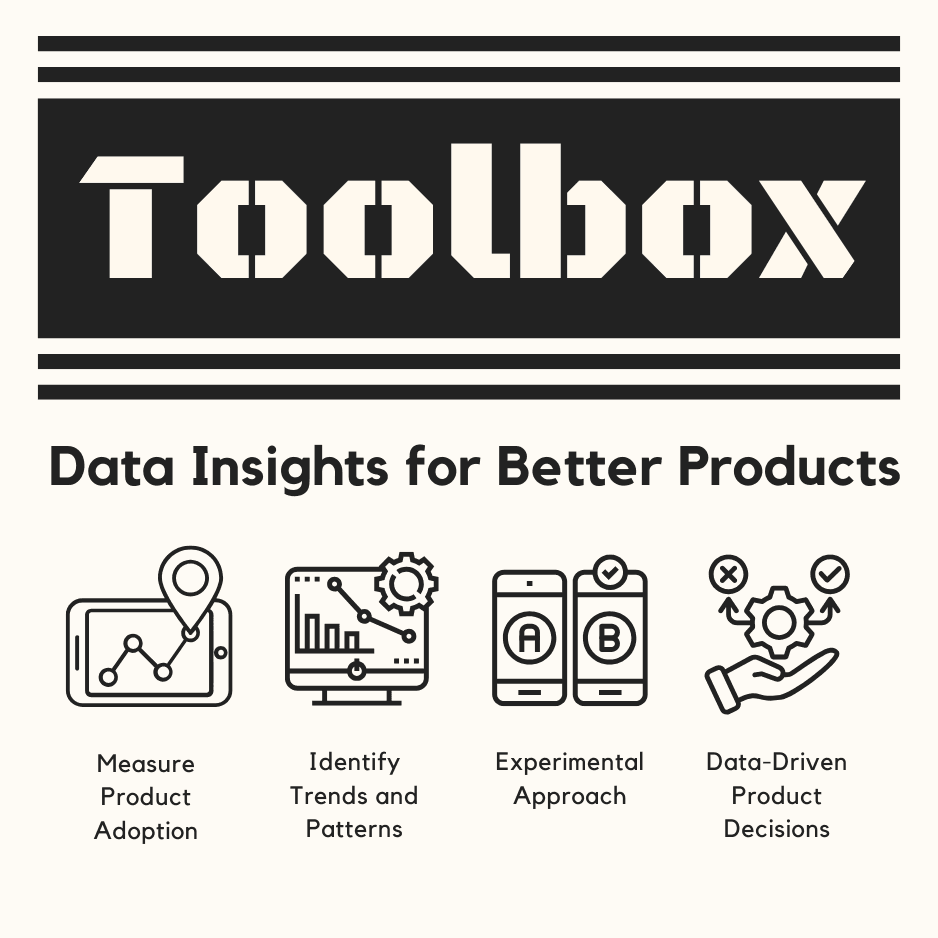
Making data-driven decisions easier—automating onboarding and event tracking for seamless product insights
Why we enhanced Toolbox and how it helps product teams make better data-driven decisions.
Understanding user behavior is crucial - are we making data-driven decisions efficiently?
Existing analytics tools often introduce security risks, lack flexibility, and require tedious setup before teams can start collecting insights.
Toolbox was built as an in-house solution to enable teams to track user interactions, conduct A/B testing, and gain insights—while ensuring full data ownership, security compliance, and seamless integration.
However, while Toolbox addressed security and flexibility, adoption was slow due to manual onboarding and cumbersome event tracking.
🔍 That’s why, in this hackathon, we focused on improving:
✔ Automated onboarding – reducing setup from 3 days to less than 2 hours.
✔ Easy-to-use event tracking SDK – making data logging for common actions effortless for developers.
What was slowing adoption and how we identified areas for improvement.
Product teams want fast access to data insights, but:
Manual onboarding required back-and-forth processes, taking up to 3 days.
Event tracking setup was cumbersome, requiring engineers to write repetitive code for every tracked event, slowing down insights.
This delayed data-driven decision-making and added workload for both client engineers and the Toolbox team.
We validated this with one potential client and four software engineers, uncovering these key insights:
✔ Manual onboarding was prone to errors and rework, making it hard to scale.
✔ Manual event tracking was a bigger pain point, consuming time and effort.
✔ Lack of detailed documentation meant engineers relied heavily on peer knowledge transfer rather than self-service learning.
What we built in the hackathon to improve ease of use and adoption.
We streamlined the onboarding process using FormSG and AWS automation to:
✔ Reduce manual onboarding time from 3 days to <2 hours.
✔ Eliminate admin work for developers with a self-service onboarding flow.
Developed an SDK to automatically log common user actions (button clicks, page views, scroll tracking), making it:
✔ Faster for developers to implement tracking without manually configuring each event.
✔ Easier for teams to start collecting insights immediately.
🚀 Impact:
🔹 Faster Adoption – Teams can start using Toolbox in hours, not days.
🔹 Increased Productivity – Less time spent on setup, more time on insights.
🔹 Scalability – Automation reduces manual workload for both Toolbox maintainers and users.
🔹 Time Returned – Developers spend less time on repetitive setup tasks, allowing them to focus on higher-value work.
✔ Secure & Compliant – Hosted on GCC, ensuring full control over data.
✔ Faster Adoption – Reduces friction for teams to start using Toolbox quickly.
✔ Automated Event Tracking – No need for tedious manual setup for common actions.
✔ Built for Internal Needs – Toolbox is driven by our product teams' priorities, not vendor pricing models.
✔ Supports A/B Testing – A feature missing in external analytics tools.
✔ Easy Integration – Custom SDK for seamless logging.
🔹 Improve Documentation & Self-Service Learning – Reduce reliance on peer knowledge transfer with better onboarding guides.
🔹 Enhance SDK Compatibility – Expand event tracking to include a JavaScript SDK for broader adoption.
🔹 Expand Automated Event Tracking – Increase coverage beyond the initial set of common actions, for example, form submission, error tracking and user navigation flow.
🔹 Drive Adoption – Promote Toolbox’s full capabilities to teams who may not realize it supports internet and Intranet systems.
With Toolbox 1.1, product teams can move faster, experiment smarter, and make informed decisions—all while keeping data secure and compliant within our organization.”
#logging-supportWant to onboard Toolbox or have questions? Join us on Slack at #logging-support!

Donna Lee (GDT-JFAC) | Jamos Tay (GDP-DEP) | Patrick Li (GDP-DEP)