A Singapore Government Agency Website
How to identify


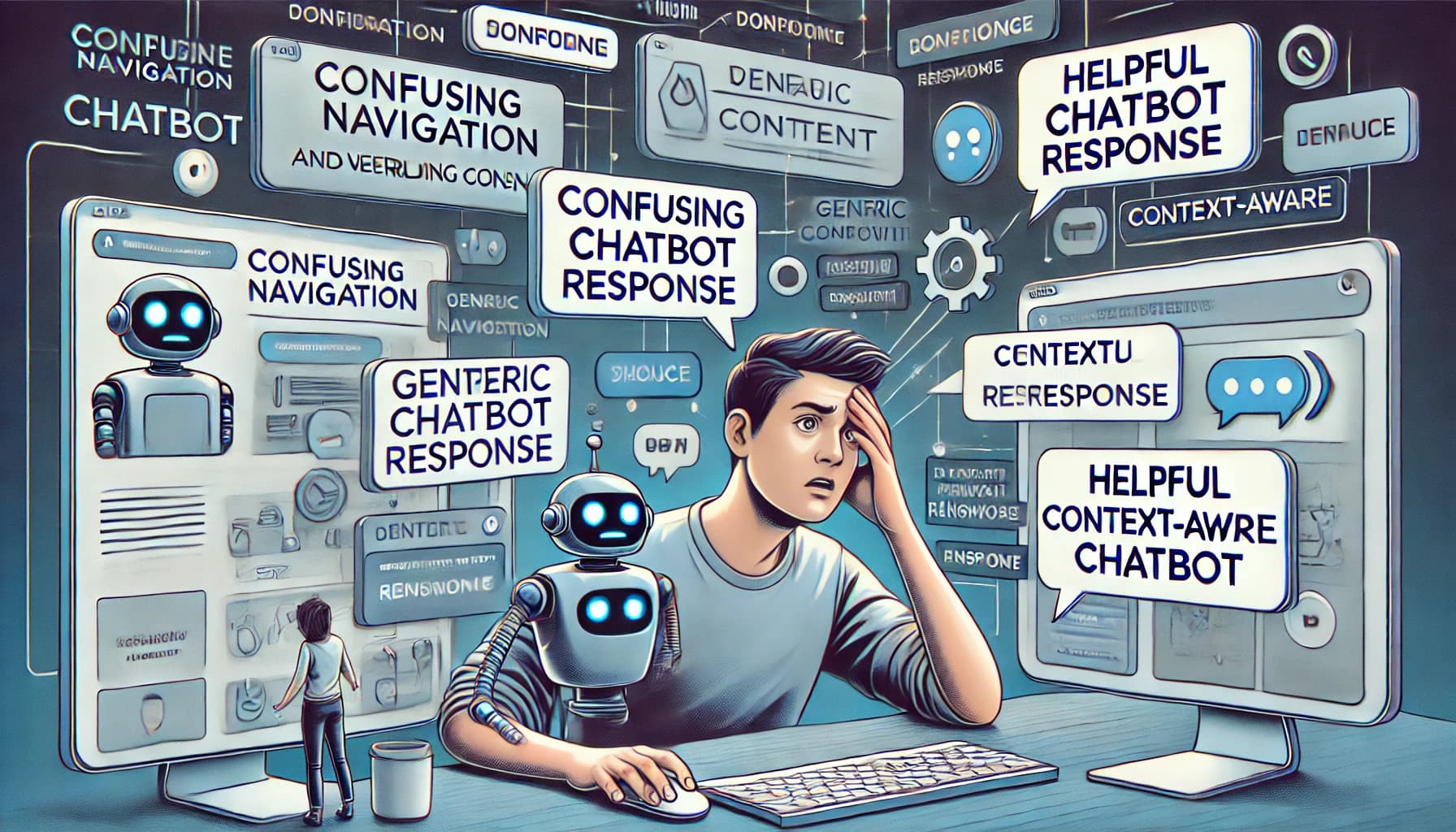
A context-aware chatbot that enhances user experience by providing precise, relevant answers based on the webpage content.
Website users need to find specific information and get relevant answers to their questions when navigating and interacting with website content. But they encounter complex navigation, overwhelming content, and receive generic, non-contextual chatbot responses. This results in poor user experience, increased frustration, unnecessary support contacts, and potential website abandonment.
The results reveal that 40% of respondents seek government-related information on a monthly basis, while 60% have not used a government website chatbot before. Among those who use chatbots, 83.3% rarely interact with them. The satisfaction rating with current chatbots stands at 2.83 out of 5. This moderate rating is primarily attributed to chatbots' inability to handle complex queries and their limited knowledge base.
70% of respondents found contextualised chatbot responses useful, with 71% expressing willingness to allow chatbots access to their personal information to provide tailored responses.
The findings suggest that respondents would be more likely to use chatbots frequently if they provided contextualised responses. This indicates that implementing contextualised responses could lead to improved satisfaction with government chatbots.
We believe that implementing a context-aware chatbot that understands the content of the current webpage will result in more accurate and relevant responses to user queries because users predominantly ask questions about the specific content they're currently viewing rather than general website information.
A context-aware chatbot that enhances user experience by providing precise, relevant answers based on the webpage content.